TOP STORIES
CARTOONS
GOOD DEBT
PENSION CRAZY
BANKSTER PAY
MPs' 2nd JOBS
TAX IS THEFT?!
FAILING SCHOOLS
AFFORDABLE NHS
1m WORK IN POVERTY
JAIL THE ACCOUNTANTS
RICKETS IS BACK
UN-NATIONALISED RAIL
LOW WAGE BRITAIN
BANK OF MUM & DAD
UK: A PRISONER OF CUTS
TAXING LIES
WATER CANNON BORIS
UNIVERSAL C.. OCKUP
FULL TIME JOBS? WHERE!

Tuesday, 15 October 2013

Tuesday, October 15, 2013 Posted by Jake No comments

SOURCE INDEPENDENT: Red Cross launches emergency food aid plan for UK’s hungry – the first time since the Second World War
The Red Cross will this winter start collecting and distributing food aid to the needy in Britain for the first time since the Second World War, as welfare cuts and the economic downturn send soaring numbers of people to soup kitchens and food banks across Europe. Its volunteers will be mobilised to go into supermarkets across the country at the end of November and ask shoppers to donate dry goods. Across Europe, the Red Cross recorded a 75% increase in the number of people relying on their food aid over the last three years. At least 43m people across the Continent are not getting enough to eat each day and 120m are at risk of poverty.

OUR RELATED STORIES:

Graphs at a glance: Government's "Help To Buy" won't help those struggling to buy a house. But it will help people with rich parents!


Saturday, 12 October 2013

Saturday, October 12, 2013 Posted by Jake 4 comments Labels: , , , , , , ,
Fishermen putting worms on hooks don't intend to be cruel to worms nor do they intend to feed fish. When baiting their lines fishermen care nothing for the welfare of worm or fish, thinking only of their own dinners. 

So it is with the Conservative’s “Help To Buy” mortgage scheme, which has more to do with where the Tories' next meal is coming from than the welfare of struggling aspiring homeowners.

In an interview on the BBC, David Cameron piously stated: 


"If we don't do this it will only be people with rich parents to help them who can get on the housing ladder - that is not fair, it is not right."

A closer look at the scheme reveals that it is precisely these people with rich parents who will be "helped to buy".


The ‘help to buy’ scheme covers house purchases up to £600,000. Few struggling aspiring homeowners aim so high. According to a House of Commons research note the average UK house price in 2013 was £170,000. The same note states that even in expensive London the average house price was a trifling £330,000 - well below the £600,000 the government is offering.


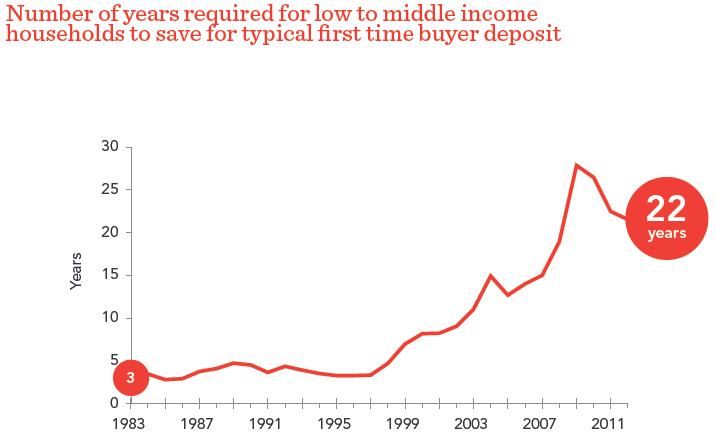
There is certainly a need to help people struggling to get on the property ladder. A report by the Resolution Foundation shows how low-to-middle incomes have become inadequate to buy a home. In 1983 it took 3 years for someone on a low to middle income to save enough for a deposit, but by 2012 it took 22 years!
Resolution Foundation, "Squeezed Britain" report


This is confirmed by figures from the Department of Works and Pensions' "Family Resources Survey" showing that between 2002/03 and 2011/12 there has been a particular collapse in those under 35 years of age buying with a mortgage.


As the Lombard column in the Financial Times commented, ‘Help To Buy’ mortgages are being offered by the banks at “terms discouraging to all but the dopiest borrowers”. In October 2013, as the Help To Buy scheme was launched, Sky News reported offers at around 5% interest from the government controlled RBS and Lloyds banks. However, these same banks were simultaneously offering cheaper loans for people with only a 5% deposit regardless of the 'help to buy' guarantee. A quick search on Google taken in October 2013 uncovered the following offers from those same banks:


  • Under "Help To Buy" Sky News reported “RBS and its Natwest subsidiary said they would be offering two and five-year fixed rate deals at 4.99% and 5.49% interest rates respectively with no fee.”. However RBS was also offering a better deal to people who only had the 5% deposit and no government "help to buy":
  • Under "Help To Buy" Sky News reported “Halifax - owned by Lloyds Banking Group - later confirmed its offering: A two-year fixed rate at 5.19% with a £995 product fee”. Again, Lloyds was offering a much better deal to those with only a 5% deposit and no government "help to buy":

Clearly the banks too are hoping to hook a few of the ‘dopiest’ lured by the government worm. And for every hooked dope, the Tories hope for the votes of another 10 dopes who have no intention of using the scheme but are bamboozled into being impressed by the Tories apparent help for hard working strivers.

If the 'help to buy' scheme was truly aimed at aspiring homeowners struggling to get on the housing ladder it would have a limit much lower than £600,000. 


According to figures from the Land Registry for June 2013, 93% of all house sales outside London were for less than £400,000, and 63% were for less than £200,000. Outside London a £600,000 limit is fatuous. Inside London the £600,000 limit will help fill houses vacated by poor people whose housing benefit subsidy has been cut, with rich people for whom the housing 'help to buy' subsidy has been inflated.


The scheme will help wealthy investors buy £600,000 houses. Investors who will be able to speculate on the housing market with 5% deposits buying via their friends and family (the government guarantee is limited to one mortgage per person). Investors  can truthfully tell their sons, daughters, nephews and nieces that it is probably cheaper to pay a mortgage than paying rent to a landlord. Particularly in London where the option of social housing is being eliminated. Figures from the Department of Works and Pensions' "Family Resources Survey" show in London the median cost of private rent is double social rent.
(For the mathematically less adept, 'median' is an average that filters out extremely high and low values which would otherwise exaggerate London private rents - BBC Bitesize provides a handy school-level explanation).

Paying a deposit of just 5% instead of 20% means an investor can invest in four houses with the same money that previously would only buy them one. Four chances in the housing casino for the price of one!

The Tories get their dopey voters, the investor gets his houses, and his sons, daughters, nephews and nieces get a cheaper place to live! So everyone is quids in except for the “struggling aspiring homeowners”. For them the resulting property bubble will actually make buying a home even more difficult!


Friday, 11 October 2013

Friday, October 11, 2013 Posted by Jake No comments Labels: , , , , ,
Maybe it should all be privatised? Maybe not, thinks Chris...
SOURCE BBC NEWS: Disability charity attacks rise in 'disgraceful' short care visits lasting just 15 minutes
Short care visits to elderly and disabled people are "disgraceful" and on the rise, a charity has claimed. Leonard Cheshire Disability says 60% of councils in England use 15-minute visits, which are not long enough to provide adequate care. "It is disgraceful to force disabled people to choose whether to go thirsty or to go to the toilet by providing care visits as short as 15 minutes long." Research by the UK Homecare Association published last year suggested 87% of home visits in Northern Ireland lasted 30 minutes or less, 73% in England and 42% in both Scotland and Wales.

OUR RELATED STORIES:

Thursday, 10 October 2013

Thursday, October 10, 2013 Posted by Jake No comments Labels:
Government to cap “back door” rail fare hike - while state-run railway company hands £209m profit back to taxpayers
Under the current rules, rail fares are tied to the rate of inflation plus 3%, averaged across all fare types. This allows them to increase some fares above the average so long as other fares rise below average. The proposed new rules will prevent firms from deliberately putting up prices on the busiest routes by much more than the average, a practice that the Transport Secretary Patrick McLoughlin called ‘a huge back door hike’. The announced curbs come as the state-run railway company in charge of the East Coast main line has returned nearly £209m to taxpayers, even as the Government prepares to privatise. Rail Maritime and Transport trade union boss Bob Crow said the profit figures ‘destroy from top to bottom’ the case for handing back the line to ‘rip-off merchants from the private sector’. DAILY MAIL

Back-To-Work schemes: Majority of UK believe government is deliberately replacing paid staff with volunteers
Two thirds of UK respondents believe that volunteers are being used to deliver public services where once paid staff operated, according to new research by volunteering body Community Services Volunteers (CSV). In a tough economic climate, the government has come under fire for implementing back-to-work schemes which detractors say both mimic community service for criminals, and shrink the job market by replacing actual paid work. The government’s new Help to Work programme will include compulsory community work through community and voluntary organisations. INFORMATION DAILY

Disability charity attacks rise in 'disgraceful' short care visits lasting just 15 minutes
Short care visits to elderly and disabled people are "disgraceful" and on the rise, a charity has claimed. Leonard Cheshire Disability says 60% of councils in England use 15-minute visits, which are not long enough to provide adequate care. "It is disgraceful to force disabled people to choose whether to go thirsty or to go to the toilet by providing care visits as short as 15 minutes long." Research by the UK Homecare Association published last year suggested 87% of home visits in Northern Ireland lasted 30 minutes or less, 73% in England and 42% in both Scotland and Wales. BBC NEWS

Fat Cat city workers line up for government's Help To Buy scheme for taxpayer-backed guarantees on 95% mortgages
Property analysts expect bankers to be some of the most eager to apply for the Help to Buy scheme. Sandy Chen, banking analyst at Cenkos Securities, said: "Getting a 95% loan to value mortgage lets you speculate on the expected house price increases a lot more than a 75% mortgage," he said. "Bankers are speculative types and are likely to be highly attracted to the possibility of making lots of money." Bankers using Help To Buy will embarrass the prime minister, who said the scheme, which is available on properties costing up to £600,000, would help "people who can afford the monthly mortgage payments but haven't got rich parents and can't pay the deposit up front". GUARDIAN

The A&E crisis explained in 60 seconds
Get Adobe Flash player

Letters warning of 10% energy price rises to start hitting doormats in next two weeks
Households should be braced for an energy bill bombshell. City experts argue that pressure from investors to protect profits and the need to give consumers plenty of notice of any price rises means hikes of ten per cent or more will have to be announced within the next two weeks. DAILY MAIL

Tobacco companies deliberately fuel black market in Britain, say MPs
Britain's tobacco industry is accused of fuelling the black market for its products by oversupplying European countries, leaving the surplus available for smugglers to bring back to the UK free of tax. Margaret Hodge, chair of the Commons public accounts committee, blasted HM Revenue and Customs for knowing about the practice by tobacco companies but "not fining a single one of them". The lapse was costing Britain £1.9bn a year in lost tax, with 9% of cigarettes and 38% of hand-rolling tobacco sold in the UK estimated to have come from the black market. GUARDIAN

'Irresponsible' Wonga payday loan advert banned
A radio advert by Wonga has been banned by the Advertising Standards Authority (ASA) because it was deemed "irresponsible" for implying high-interest loans could be taken lightly. The ad featured the Fifties song Mr Sandman with newly written lyrics – "Mr Wonga lend me some dough. Make it the simplest loan that I'll ever know. Give me two choices when I go on line. One for how much I want. Two for what length of time. Mr Wonga at wonga.com. You make it easy when the month feels too long" and so on. The ASA challenged the advert for its claims: "Make it the simplest loan I'll ever know" and "you make it easy when the month feels too long", which were deemed irresponsible because it gave the impression that a high interest short-term loan was something that could routinely be taken between paydays in order to supplement a monthly income. MoneySavingExpert founder Martin Lewis has called Wonga and other 6,000% APR loans "the crack-cocaine of the moneylending world". TELEGRAPH

Saturday, 5 October 2013

Saturday, October 05, 2013 Posted by Jake 2 comments Labels: , , , ,
"காக்கைக்கும் தன் குஞ்சு பொன் குஞ்சு" -  “Even a crow thinks its child is golden”. This proverb out of ancient India applies particularly well to privatisations. To the parent it is simply obvious their child is a treasure.  While others may notice the mite’s behaviour and odour with dismay, the parent focuses on precisely the same antics and bouquet with delight.


Not to be outdone, ancient Europe provides an equally apposite proverb:
"quod ali cibus est aliis fuat acre venenum" - "One man's meat is another man's poison".

Those debating the privatisation of public services – be it outsourcing of schools, hospitals and prisons, or the privatisation of Royal Mail - sniff precisely the same thing. What stinks to one smells sweet to the other.

Make no mistake, successful private companies bring success to their managers and shareholders regardless of the impact on everyone else. The “invisible hand” of Adam Smith (patron saint of capitalism, who like most saints is doubtless aghast at what is done in his name) that is said to push better services to customers is not benevolent. That mystical hand is directed by the selfish pursuit of profit. Ineptly regulated banks, energy companies, and the transport industry have all fulsomely proved that the quickest route to profit is the rip-off.

The irony is the decision to privatise public services, yay or nay, is made by politicians elected by us ripped-off Britons. Politicians spout their soundbites, one way or the other with equal sincerity (i.e. very little). The question for us voters is not whether privatisation brings overall benefits or dis-benefits. The question is who gets the upside, and who gets stuffed.

While private companies act in their own selfish interests, we ordinary citizens are asked to be more noble. We get the advice Queen Victoria gave her daughter on how the princess should respond to her husband's less welcome advances: "lie back and think of England". 

Being prone and selfless is a mistake even in capitalist terms. For the "invisible hand" to work, everyone must be selfish. Otherwise it is not the 'best' who wins the business, but the most selfish and ruthless and thus the 'worst'. 

So lets take a selfish look at two of the biggest privatisations from the point of view of we who elect the politicians who decide whether to privatise.

In 1990 the Central Electricity Generating Board (CEGB) was privatised. We take extracts from a report published by the World Bank, “The Restructuring and Privatization of the U.K. Electricity Supply—Was It Worth It?” written by two economists from Cambridge University:

"The restructuring of the CEGB involved dividing it into four successor companies on March 31, 1990—three of which were soon sold to the general public—creating a power pool, and liberalizing entry into the generation market. The three privatized companies are National Power and PowerGen, which took the thermal generating plant, and National Grid, which was allocated the high-voltage transmission network. Nuclear Electric took the nuclear power stations."

The report looks at the net benefits of sticking with the publicly owned CEGB compared with the results of privatisation on the assumption that key strategic changes were made:

  • Ending the costly nuclear expansion programme


  • Renegotiating the price of imported electricity from France. (As part of privatisation Britain got a worse deal in the price paid to Electricité de France (EdF)).


  • Moving from expensive coal to cheaper gas fired power stations.


The net effect of privatisation was a substantial improvement (reduction) in the cost of generating power. Yay!

However, that improvement did not go to the consumers, but was taken as increased profits for the private companies and their shareholders. Boo!

The report goes as far as to say the impact on customers buying the energy was very negative.


The same happened following privatisation of the railways. There was a bonanza of cash, but the cash did not go into investing in infrastructure nor in holding down passenger ticket prices. A report by Parliament in September 2013 stated since 1994/95 prices are 150% greater in real terms - a period during which 90% of Britons' incomes stagnated:

"Rail fares are greater now, in real terms, than they were at the end of the 20th Century. In January 2013 fares across all operators are 23% higher than they were in January 1995. Prices have risen fastest amongst long distance operators.

Regulated fares have been allowed to increase in real terms since 2004: Government policy for regulated fares has allowed for average increases of RPI+1% point.

Passenger revenues have increased significantly since privatisation, and in 2012/13 totalled £7.7bn, roughly 150% greater, in real terms, than in 1994/95."

According to the Office of Rail Regulation (ORR) everything about the railways has been steaming upwards for a decade except for one thing that has been falling like a lump of discarded coal: investment by the private sector train companies back into the industry. 


The extra cash went to the managers and shareholders of the private companies.

We have nothing against privatisation of public services when done to improve public services. Sadly private companies that put other people first tend to go bust. Which is why there are some things that need to be in the public sector.

Friday, 4 October 2013

Friday, October 04, 2013 Posted by Jake No comments Labels: , , , ,
KJ and Chris get an unexpected independent opinion...

SOURCE TELEGRAPH: It's a bug's life as expert warns council cutbacks will lead to 'pest plagues'
Britain faces a dramatic increases in "pest plagues" and rat infestations as councils axe their pest control teams to cope with Government cutbacks, experts warned today. A new report warned that 15% of the nation's local authorities have discontinued their pest services and the number is set to rise "considerably". Simon Forrester, chief executive of the British Pest Control Association, said he feared a big rise in the rodent population, while the number of bed bugs were likely to rise in London because of the "influx of tourists" after the 2012 Olympics.
OUR RELATED STORIES:

Graphs at a glance: Are cuts to incomes and services really necessary? Are Britons really too expensive for Britain?

How companies use inter-country ruses to dodge tax

Graphs at a glance: Government wants you to think we made a profit on sale of Lloyds Bank shares. Actually we made a thumping loss!

Thursday, 3 October 2013

Thursday, October 03, 2013 Posted by Jake No comments Labels:
Offloading State's stake in Lloyds is 'biggest blunder since Brown sold gold', warns top aide to Vince Cable
Selling Government-owned shares in Lloyds Banking Group could prove as big a mistake as Gordon Brown’s ill-timed gold sell-off of the late 1990s. The alarm has been raised by Lawrence Tomlinson, a multi-millionaire adviser to Cable. Tomlinson said: ‘What’s the big rush? Just because we can get some money back it doesn’t make sense. I would hate to think they do the same thing Gordon Brown did.’ He suggested that banks themselves would not sell shares now if they had financed a turnaround in a similar way. ‘What bank funds a crippled business and sells it back to the market at the original price?’ he asked. The allegation that a sale might compare to Brown’s sale of gold at $300 an ounce will particularly hurt Osborne, who taunted him over the sale. Brown sold 400 tons in 1999 for £2billion. The gold price has surged since, meaning he lost out on as much as £9billion. DAILY MAIL

It's a bug's life as expert warns council cutbacks will lead to 'pest plagues'
Britain faces a dramatic increases in "pest plagues" and rat infestations as councils axe their pest control teams to cope with Government cutbacks, experts warned today. A new report warned that 15% of the nation's local authorities have discontinued their pest services and the number is set to rise "considerably". Simon Forrester, chief executive of the British Pest Control Association, said he feared a big rise in the rodent population, while the number of bed bugs were likely to rise in London because of the "influx of tourists" after the 2012 Olympics. TELEGRAPH

Google UK paid just £12m in corporation tax in 2012 on sales of £506m - but firm claims it pays its dues
The revelation will add pressure to the internet giant over its tax dealings. Google says most of its UK sales are generated by staff in Ireland, hence their low UK tax bill. But an investigation by Reuters found UK staff were responsible for sales rather than, as Google claimed, their colleagues in Ireland. Reuters further claims that Google's total UK sales for 2012 stood at £3.5billion. Google declared profits of $10billion (£6.1billion) worldwide in 2012. DAILY MAIL

Most payday loan customers 'borrow for food and heating' - while many lenders still fail to check they can afford to repay
A shocking survey has revealed that the majority of payday loan customers are borrowing to buy food, heat their home, or avoid eviction. The worrying findings come from charity group Christians Against Poverty. More than half the clients surveyed said they had taken out between two and five payday loans, with 78% of respondents saying they had used the money borrowed for food shopping. While the quick processing times may make the loans suitable when a person is approaching payday but hit with an unexpected cost they can't afford, only 5% of people surveyed said they had used the loans for an emergency. CAP chief executive Matt Barlow said: 'This evidence shows that people taking out payday loans are not, typically, doing cosy house repairs as most payday lenders would have us believe. People who take out this expensive sort of credit are hungry, worried about keeping warm and becoming homeless.” DAILY MAIL


Housebuilder share boom 'not sustainable'
House builders will not continue to deliver high returns for investors, say fund managers. Anthony Cross and Julian Fosh of the Liontrust Special Situations fund said they were “sceptical” about the “long-term sustainability” of the housebuilding sector. “We have ultra-low interest rates, we have a government policy that is deliberately trying to get the housing market going, we are now seeing talk about house price bubbles occurring,” said Mr Cross. “But in the meantime people’s real wages are lower than they were in 2008, so we would question the long-term sustainability of trying to pump up the housing market.” TELEGRAPH

David Cameron brings forward Help to Buy scheme
A controversial scheme allowing people across the UK to take out 95% mortgages will be launched next week - three months earlier than planned. Cameron rejected fears the Help to Buy scheme will fuel a housing bubble. He said: "If we don't do this it will only be people with rich parents to help them who can get on the housing ladder - that is not fair, it is not right." He rejected concerns - raised by Business Secretary Vince Cable among others - of an unsustainable boom in house prices, particularly in the south-east of England. BBC NEWS

George Osborne extends 'work for benefit' for jobless
The long-term unemployed will have to undertake work placements in return for their benefits. People will have to remain on “help-to-work” until they found employment - unlike the current scheme which is limited to six months. But a Department of Work and Pensions assessment of mandatory work activity - a similar compulsory work scheme introduced by ministers in 2011 - found it "had no impact on the likelihood of being employed". And on the work programme, DWP figures suggested one in 10 of those seen found a long-term job. BBC NEWS

New executive pay rules give shareholders binding vote
A firm's remuneration policy will now require the approval of more than 50% of shareholders for a policy to pass. Business Secretary Vince Cable introduced the shift to make a "clearer link between pay and performance". The move came after investor anger over rising boardroom salaries at a time of falling share prices. BBC NEWS

E.ON scraps fixed-price tariff scheme for thousands of pensioners
Tens of thousands of pensioners face higher gas and electricity bills this winter after the energy giant E.on today announced plans to scrap a tariff aimed at the over 60s. From next week, these customers will be "renewed" onto E.on's standard EnergyPlan, which could be as much as £180 a year more expensive, unless they call up and try to find a different deal. E.on insisted it had no choice following proposals from the industry regulator Ofgem for energy suppliers to cut the number of tariffs they offer to just four per fuel. GUARDIAN

Bank of England to beef up stress checks to measure the stability of the banking system
The bosses of Britain’s biggest banks could face the sack if they fail annual health checks to test their ability to withstand financial shocks. The Bank of England’s new beefed up ‘stress tests,’ to gauge the stability of the banking system, will start next year for the eight biggest lenders. The rules could be rolled out to cover smaller lenders over the next five years. The financial safety watchdog, the Prudential Regulation Authority (PRA), said that it could take even more drastic action. This could include forcing banks to cut back on bonuses and dividend payments, or raise more capital. DAILY MAIL

Tuesday, 1 October 2013

Tuesday, October 01, 2013 Posted by Hari 1 comment Labels: , , , , , , , ,
Tuesday, October 01, 2013 Posted by Jake 1 comment Labels: , , , , , , , ,

Share This

Follow Us

  • Subscribe via Email

Search Us